
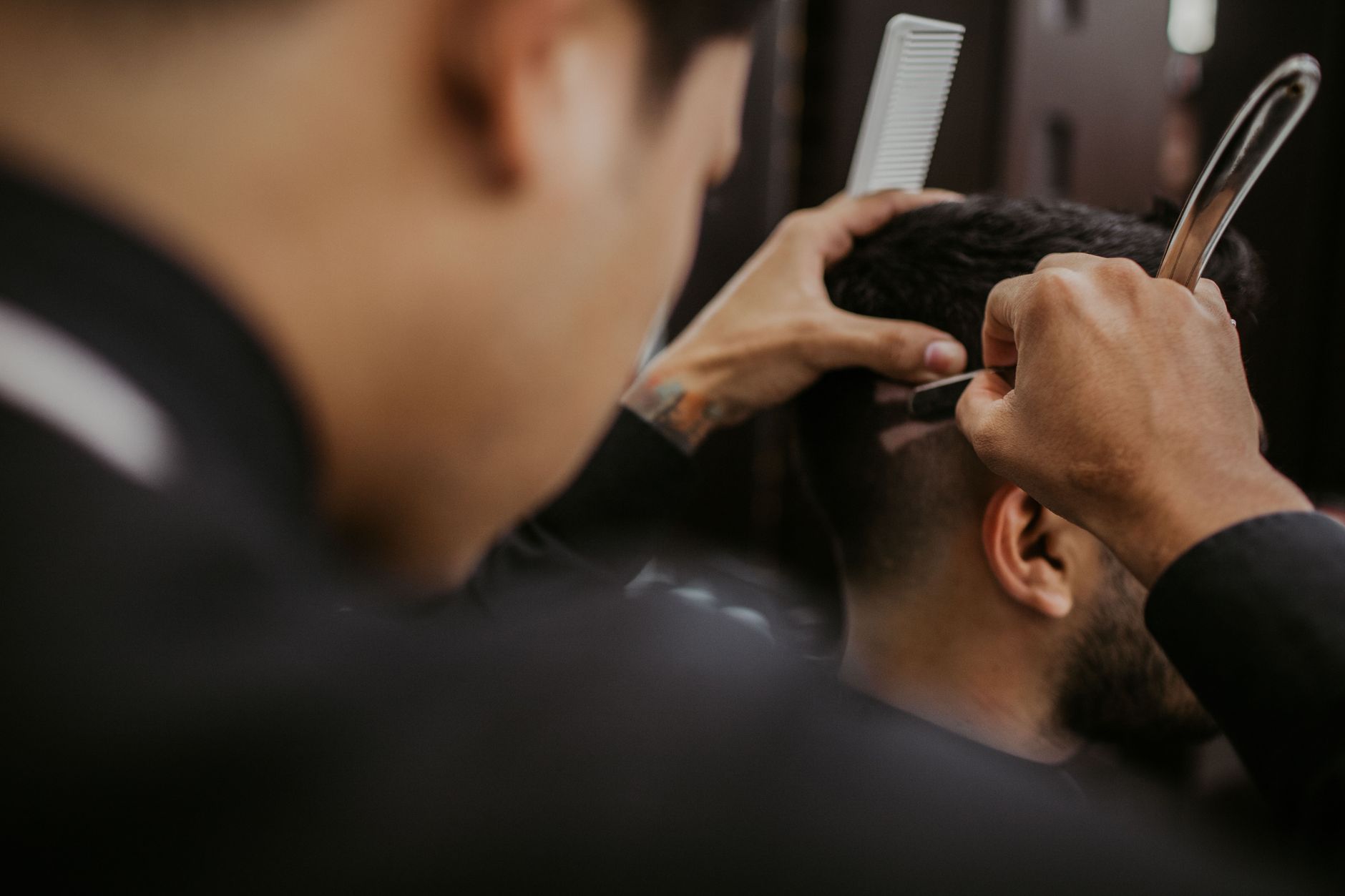
You sit down in the barber chair, your barber asks what you want, and you say: “Just clean it up a little.” Three weeks later you are back, and the same thing happens. The cut is fine. But it is never quite right. This is the most common problem men have at the barbershop, and the fix is simpler than you think. It comes down to communication, vocabulary, and a little preparation.
Why Most Men Struggle to Describe What They Want
Men are not taught to think about their hair the way they think about other decisions. Most of us grew up pointing at our head and saying “shorter” or defaulting to whatever our dad got. The barbershop has its own language, and if you do not speak it, you will keep getting approximate results instead of exactly what you want.
The good news is that the vocabulary is not complicated. Learning a handful of terms puts you in control of every haircut from here on out. Your barber is a professional. Give them clear information and they will do better work. It is that simple.
The Vocabulary You Need
Fade vs. Taper
A taper is a gradual decrease in hair length from the top of the head down to the neck and ears. The hair does not go all the way down to the skin. It just gets progressively shorter. A fade, on the other hand, blends the hair down to the skin at some point. The difference is where the blend starts and how close it gets to the skin.
Fades are described by where they sit on the head: low fade (just above the ear), mid fade (halfway up the sides), and high fade (near the top of the sides). A skin fade goes all the way down to bare skin. A drop fade follows the natural curve behind the ear and drops lower in the back. Each one creates a different silhouette.
Texture vs. Length
These are two different dimensions and you can adjust each independently. Texture refers to how the ends of the hair are cut: blunt cuts leave more weight, while point cutting or razor cutting creates movement and removes bulk. Asking for “texture” means you want the hair to look less heavy and more natural. Length is straightforward: how long is the hair in a given area.
Other Terms Worth Knowing
A lineup or edge-up is the clean, sharp line cut along the hairline at the forehead, temples, and behind the ears. A hard part is a shaved line that separates one section of hair from another. A taper fade combines both a taper and a fade. When you say “leave it natural,” you are telling the barber to work with your hair’s texture rather than fighting it.
Using Reference Photos: The Easiest Communication Tool
If you want a specific look and you are not sure how to describe it, bring a photo. This is not embarrassing or indecisive. It is efficient. Barbers see dozens of clients a week. A clear reference image eliminates guesswork and makes the conversation faster and more accurate.
Save photos to your phone. Find men with a similar hair type and face shape so the reference is realistic. Bring two if you can: one showing the style you want from the front, one from the side or back. Then tell your barber what you like about the photo and whether there is anything you want adjusted.
What you should also look for in a great barber is someone who looks at that reference, considers your hair type, and gives you an honest assessment of what is achievable. Read more about what separates an average barbershop from a great one so you know what standard to hold your barber to.
What to Say When You Do Not Know What You Want
This happens to everyone. You sit down and you genuinely do not have a specific cut in mind. Here is a framework that always works: tell your barber your lifestyle, how often you get cuts, and how much maintenance you want to do at home.
Something like: “I come in every three weeks. I do not style my hair in the morning. I want something that looks clean without effort and grows out well.” That gives your barber everything they need. A good barber will ask follow-up questions, suggest something that fits, and explain why. That is the beginning of a real working relationship.
Give Your Barber Context
Tell them what you do for work if it is relevant. A guy in a courtroom every day has different needs than a guy on a job site. Tell them if you have a wedding or event coming up. Tell them if you have been growing out a specific section. These details matter and help your barber make better decisions on your behalf.
How to Give Feedback Without Awkwardness
If the cut is in progress and something is not looking right, speak up immediately. Do not wait until the barber is finished and then feel like you have to accept it. Just say: “Can we keep a little more length on the top?” or “The fade is coming in a bit higher than I expected. Can we adjust?” A good barber will not take offense. They want you to leave happy.
If you get home and realize it is not quite what you wanted, call or text the shop before your next visit. Most barbers appreciate knowing what to adjust and will make it right at the following appointment. The worst thing you can do is quietly switch barbers without saying anything. You lose the relationship and the barber never gets the chance to improve.
Building the Relationship Over Time
The best haircut experience happens when you see the same barber consistently. They learn your hair. They know how it grows, where it is thick or thin, how it behaves in different lengths. Over time, you need to say less because they already know what you want. That is the goal: a barber who knows your head the way a tailor knows your measurements.
For more on the language of barbering and how professional barbers think about cuts, Men’s Health’s guide to talking to your barber is a solid reference. And if you are ready to put this into practice, book your next appointment and come in prepared.